
Spreading Hope at Cape and Islands Schools
D-Y Hope Squad members shed light on their experiences
The middle and high school years can be tough. As preteens and teens, it can be hard to find a circle of peers who are in your corner, which is especially important while navigating social challenges and complicated emotions. For many students on Cape Cod and Martha’s Vineyard, there is a system of support they can lean on in difficult times: the Hope Squad.
Hope Squad is a national, evidence-based suicide prevention program that trains students to support their peers who are struggling with mental health issues. On the Cape and Islands, Sharing Kindness provides support, funding, and oversight to any school that is interested in starting a Hope Squad, hosting trainings for school staff to become advisors. The intent is to meet students on their level, with the research-based knowledge that children and youth are more likely to seek help from a peer rather than a trusted adult.
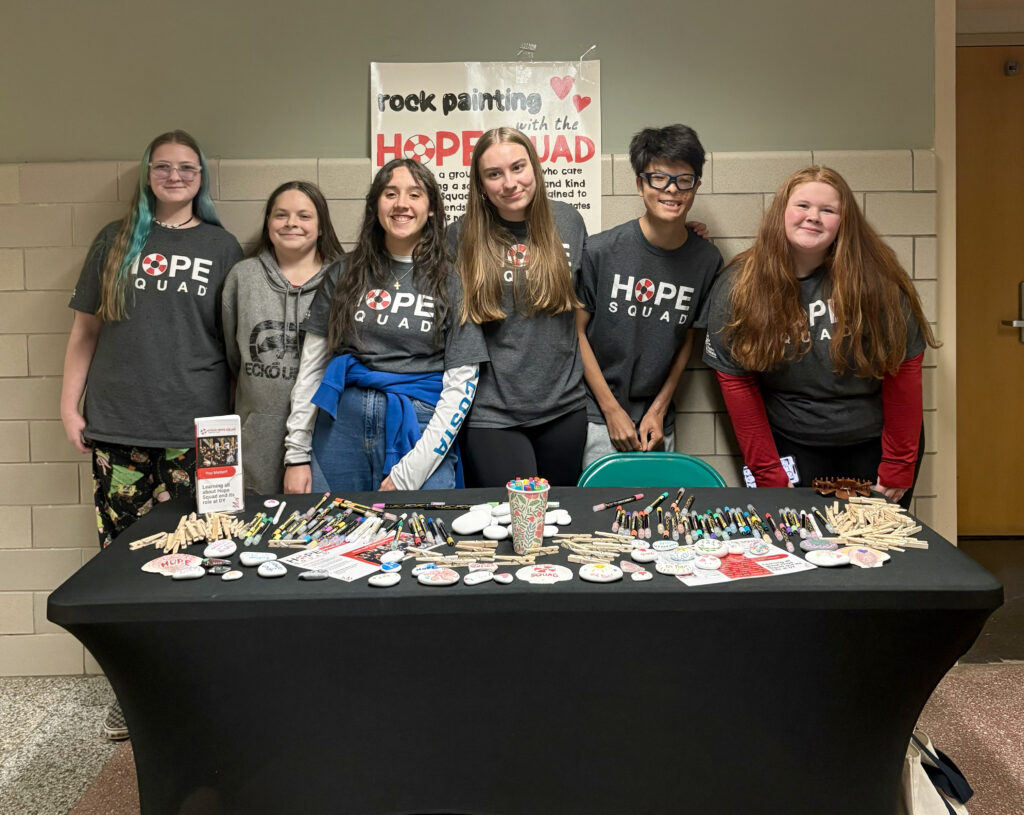
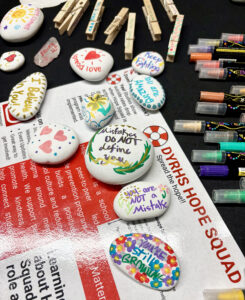
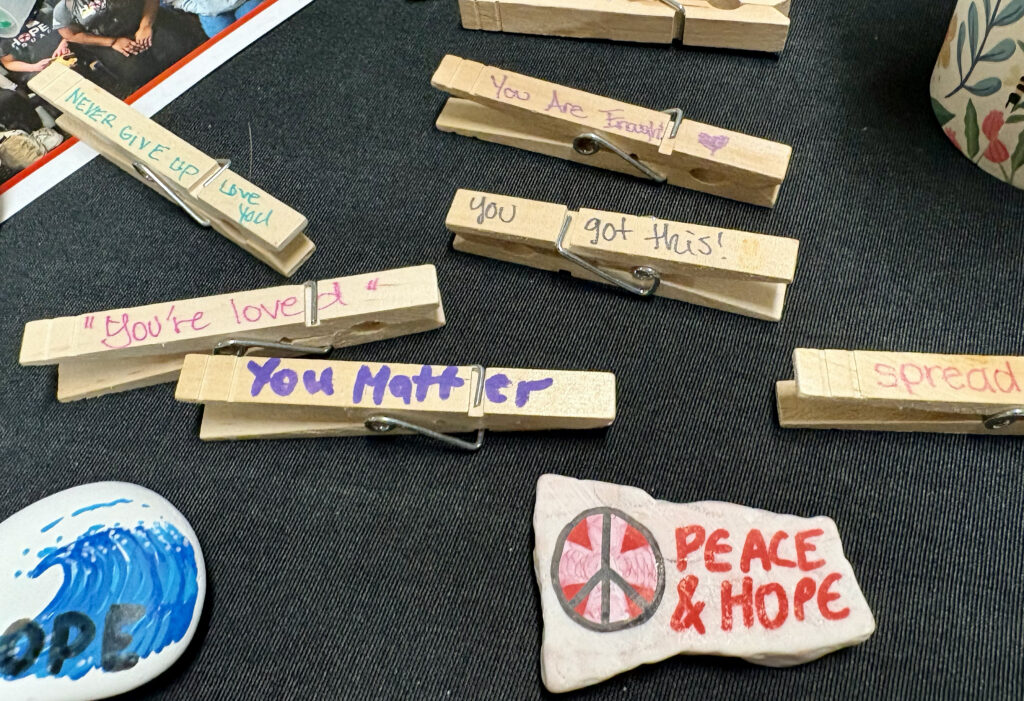
Members of D-Y’s Hope Squad hosted rock painting and clothespin activities at an event featuring motivational speaker Emma Benoit this past March.
One of the many local schools involved in the program is Dennis-Yarmouth Regional High School. We recently sat down with a handful of the squad members there to discuss their experiences.
Catherine Krukowski, a rising senior, was invited this year to join the Hope Squad National Council, through which she will participate in discussions, projects, and planning efforts for the organization. When asked why she wanted to be part of the squad initially, she said, “I think it’s really easy for students to feel unseen, to feel unnoticed, and I want to be somebody that people can come to and that people can trust.”
Fellow squad member Edna Perez, who will be a junior this year, added, “I know a lot of my peers will sometimes feel lonely, and it’s nice to have people who know how to comfort them.”
Having designated peers to approach for support is helpful, said rising sophomore Piper Johnson, because her and other students aren’t comfortable talking about their feelings; there’s a stigma around it, as many teens are afraid of affecting other people’s moods. “And that’s not okay,” she said.
Through their experiences with Hope Squad, the students have learned how to listen, support their peers during challenging times, and use non-stigmatizing language when talking about suicide and mental health. For example, Perez said, “like saying that someone ‘committed’ suicide makes it sound like it was a crime or something bad that they did. We shouldn’t be wording it like that.” (The World Health Organization recommends using the language “died by suicide” or “took one’s life” instead.)
Since Hope Squad began at D-Y, the students agree that their peers overall have joined the cause, even correcting one another when they hear harmful jokes about suicide and mental health. Krukowski mentioned that when these comments occur, she often hears non-Hope Squad members say “Hope Squad, Hope Squad” as a reminder for others to change their language – and the jokes really do stop.
Part of the Hope Squad curriculum involves organizing events and activities that foster a positive and welcoming environment at school. At D-Y, some of these have included a “Send a Smile” fundraiser around Valentine’s Day that involved sending messages to peers; writing inspirational notes on the bathroom mirrors during Hope Week (says Perez, “If someone was going to the bathroom because they were escaping or having a bad day, they could read the little sign and it could help them”); and writing kind words on clothespins that they secretly pin to others’ clothes and backpacks.
The students said they enjoyed attending the annual Hope Squad Summit hosted by Sharing Kindness at Cape Cod Community College. “It was a really cool thing to be a part of because you’re in a room full of people that care as much as you do about other people,” said (recently graduated) senior Caoimhe Cogan. “And it’s cool because you kind of feel connected to the people in the room, even if you haven’t met them.”
Cogan recalled helping a peer who sat at her lunch table, who she noticed making jokes that made her worry about her mental health. “Even if she says, ‘Oh it’s fine, it’s fine,’ I’ve made sure she has my number or any social media [account] that she wants to contact me on. Or just, like, catching up with her or talking to her about how her weekend was and seeing how she is day to day. I feel like she has changed the ways that she talks about some things, even if it’s just not saying certain words. It’s at least a little bit of a change.”
Krukowski has found that her peers in marching band have become more comfortable talking to her about personal issues because of her status as a Hope Squad member “and I’m trained to help them in certain ways.” Adds Johnson, “I feel like it’s also not even just people being more comfortable talking to us, it’s us being more comfortable talking to people. Like going up to random people that we see [who are] upset and being like, ‘Hey, are you okay? Can I help you?’”
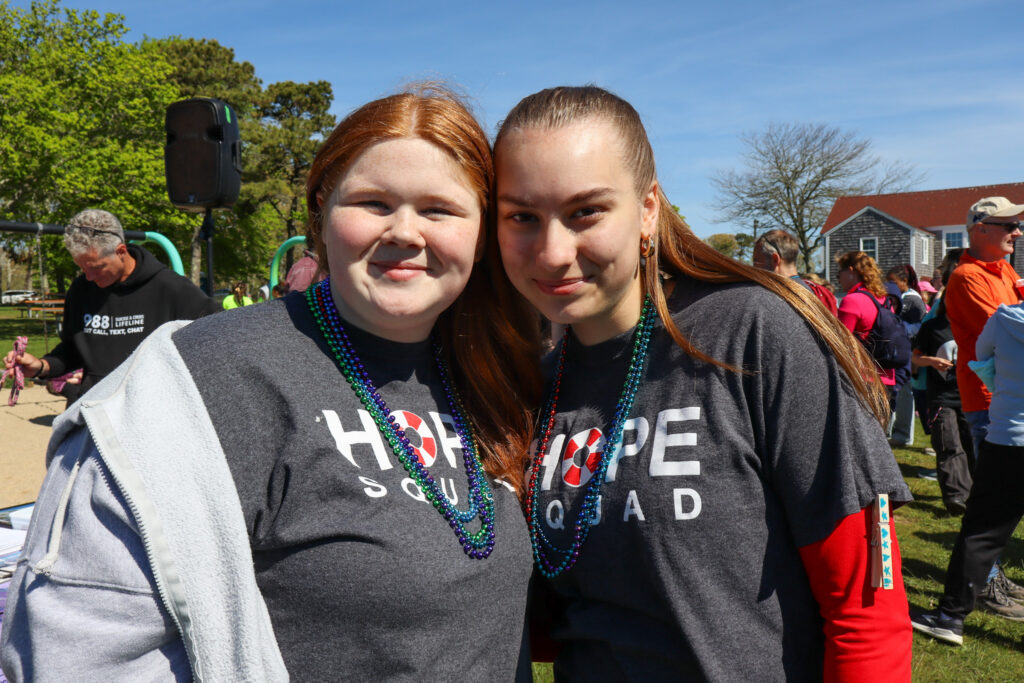
Johnson and Krukowski at Sharing Kindness’ Suicide Awareness Walk in May.
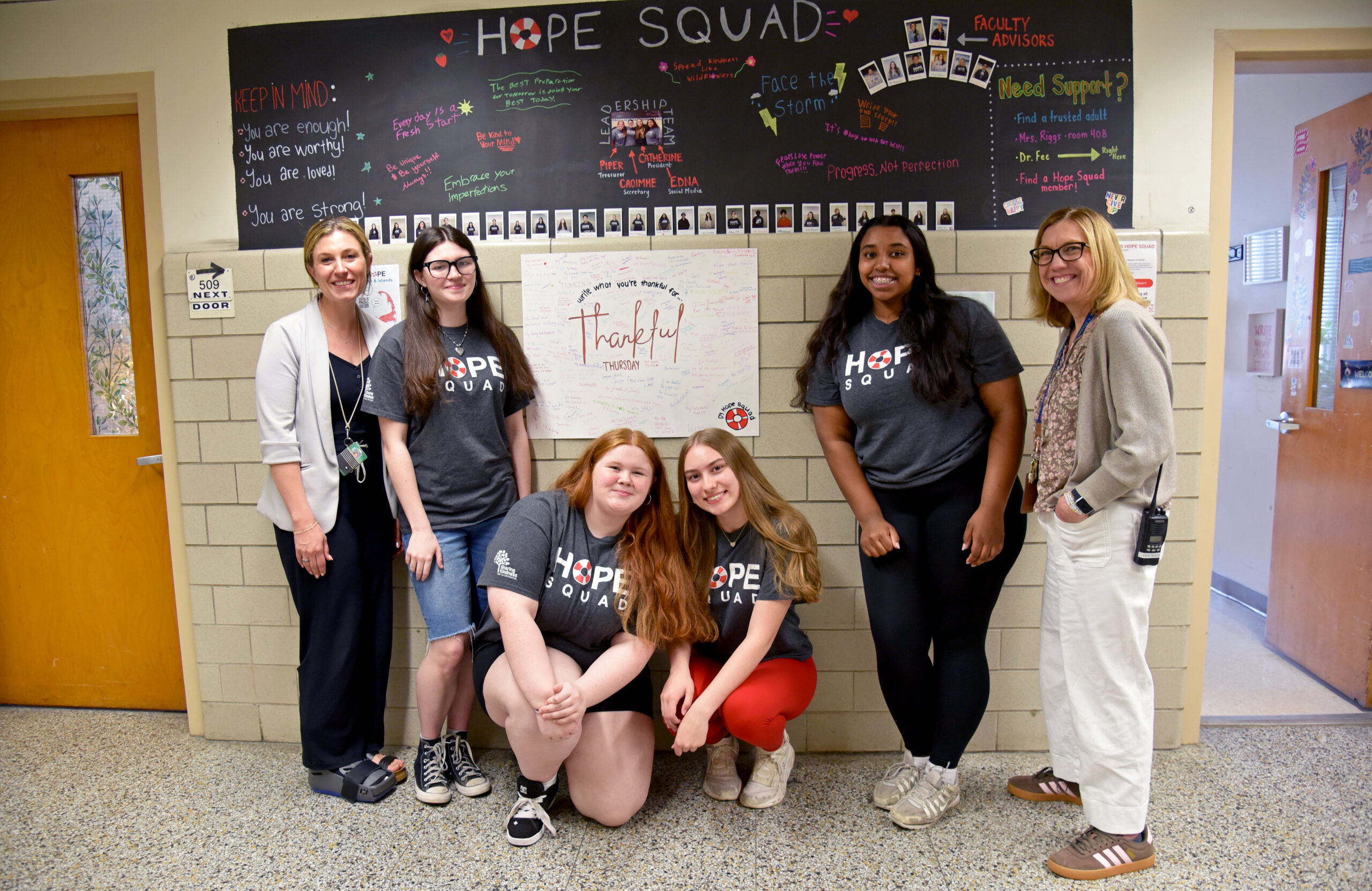
Being in the squad has its challenges. One of them is knowing when to relay information to a trusted adult, for which they have advisors to offer guidance (D-Y has eight advisors, including Psychologist Dr. Pamela Fee and School Social Worker Deborah Riggs, LICSW, who are pictured above with the students). Another is overcoming stigma surrounding these topics, especially among youth – although, with the exception of the occasional joke or comment, Johnson says the culture at school has noticeably changed.
In addition, Perez said, it’s important to remember that Hope Squad members can have tough days just like anyone else. “That’s something that was challenging with me, kind of being like, ‘Oh, well you know, I shouldn’t feel this way because I should be helping others.’ It’s really good to remember that everyone is human and even if you are helping others, you are allowed to receive help yourself,” she said.
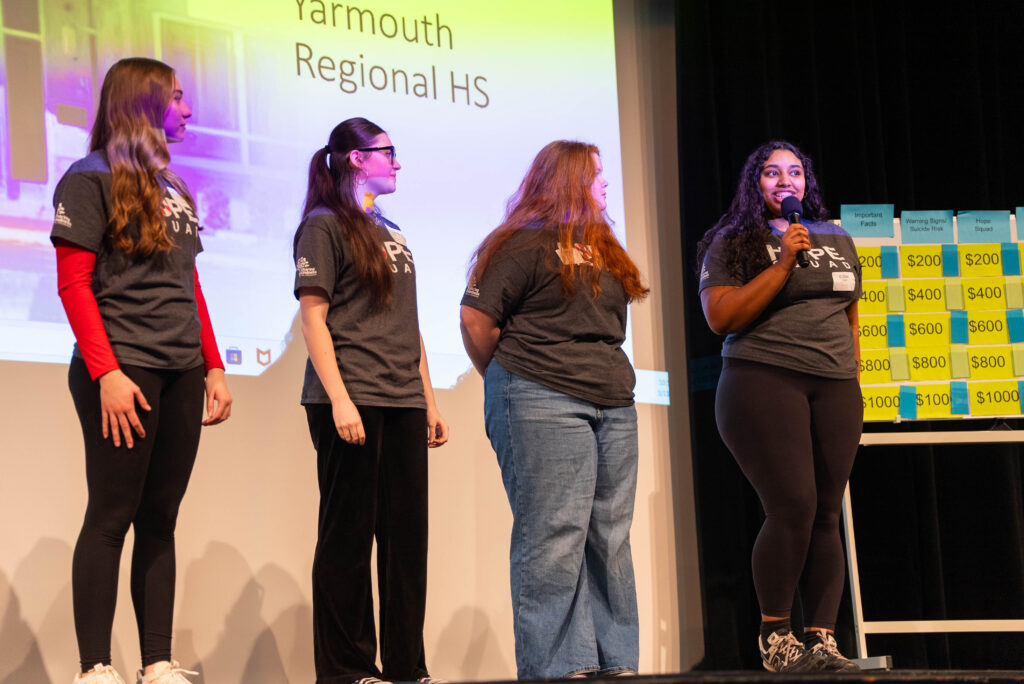
Perez speaks alongside Krukowski, Cogan and Johnson at this year’s Cape & Islands Hope Squad Summit.
ABOUT THE AUTHOR
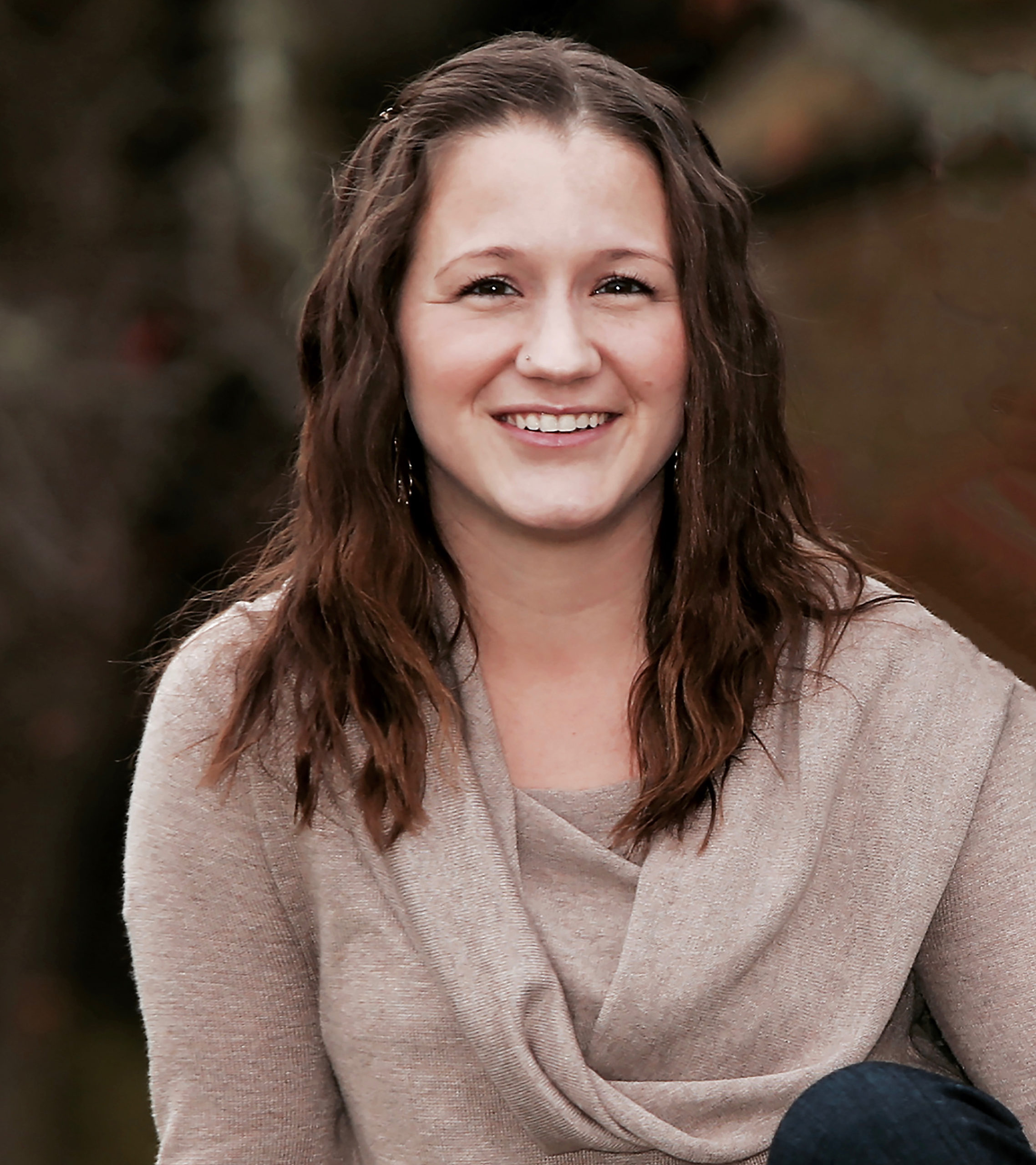
Lannan O'Brien is the marketing manager for Sharing Kindness. Lannan is a local freelance writer, editor and social media manager whose work has appeared in magazines and newspapers throughout Massachusetts and New England.